
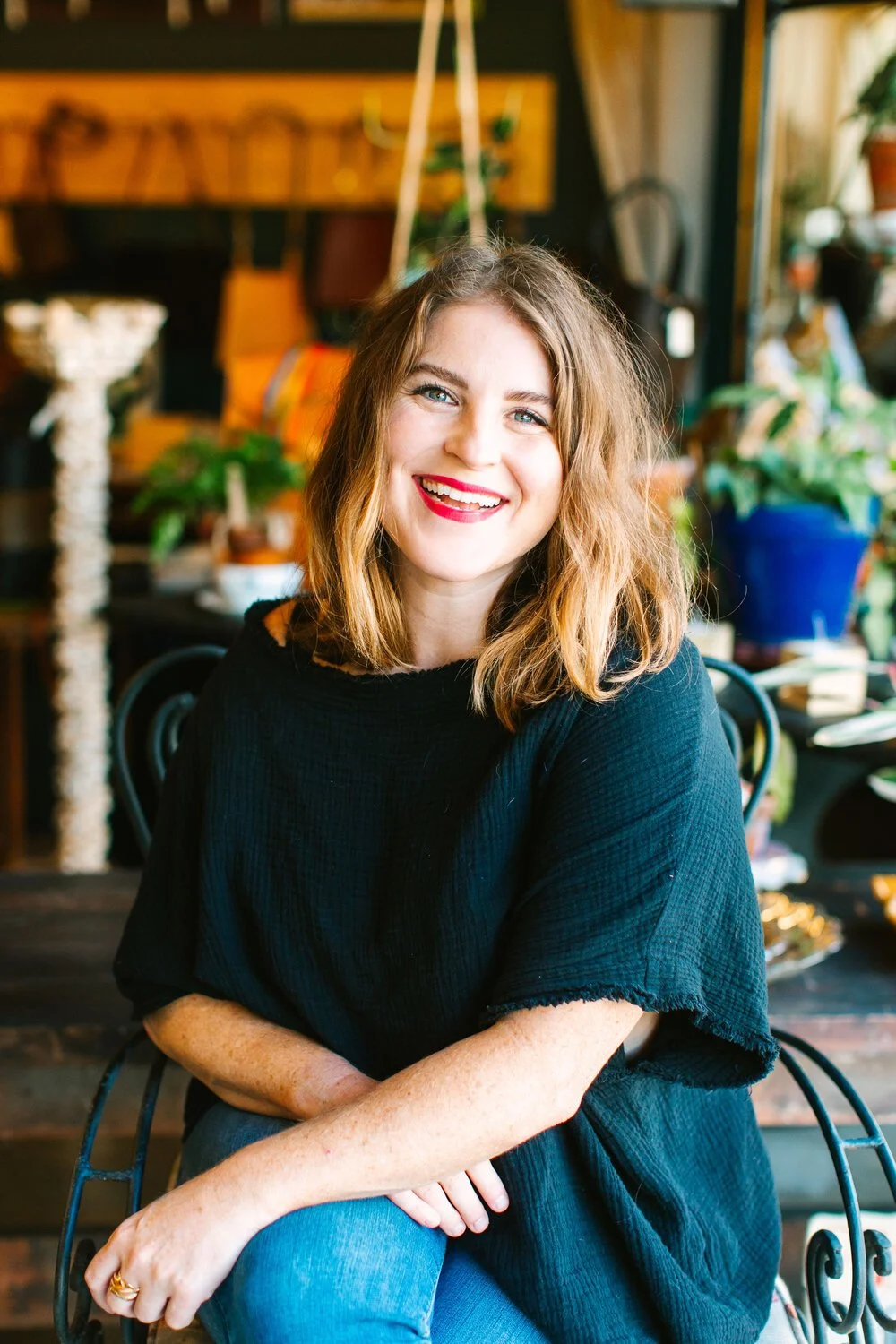
Today on the blog, we have a real treat for you - our very own lead consultant, SK Carr has poured her heart into Curated Connections by Kevin + Kate and we are pretty big fans of her work.
Her blog is full of thought provoking and encouraging work, so we’re delighted to share the following excerpt with you - Too Much of a Good Thing: Letting Go of Everyday Excess written by SK Carr.
Let’s be honest, most of us have too much of something in our homes. Not because we’re messy or careless, but because life accumulates. We travel. We try new things. We fall for the latest trends. We hold on “just in case.”
But here's the truth: the more stuff we own, the more of our energy it consumes. In most cases, less truly is more—not for aesthetics, but for function, peace of mind, and ease. Let’s walk through a few common spaces in the home where excess tends to sneak in and explore how simplifying can transform your day-to-day experience.
The Kitchen
It’s the land of “good intentions.” You fall in love with a cute mug on a trip. You grab the latest trending Stanley Cup color. You try to stay hydrated, so you buy another bottle. Before you know it, your cabinets are overflowing with things you rarely use.
I’m not here to make you toss every mug you love—I love my mugs. But even I find myself purging from time to time, keeping only the ones I truly enjoy right now. As for water bottles, my husband and I each have two. That’s it. Why? Because we’ve realized that’s all we need.
Yes, it can feel fun to grab the newest color of a trendy cup—but let’s also think about environmental impact. Are we really using what we already have? Are we just buying out of habit? Sure, we say we’ll donate it, but not everything finds a second home—and more often than not, it ends up in a landfill.
Things to consider:
How many mugs or water bottles do I actually use before I run the dishwasher?
Do I have the space for everything I’ve collected?
Am I buying new things out of habit or because I truly need them?
Am I considering the environmental impact of constant buying?
The Linen Closet
This one’s a sneaky little storage trap and an area where we bring in new items and don't take the old out. We justify it with “what if”—what if the dog needs a bath, or we have guests, or there’s a big spill? All valid reasons… to keep a few extras. But not a mountain.
When it comes to towels, I think three or four “old towels” for emergencies is more than enough. Any more, and they start to spill out of the closet, making it harder to grab what you need when you need it. Same goes for washcloths and hand towels. How many do I need in a week or two between washes?
For sheets, two sets per bed is my personal sweet spot. One on the bed, one clean and ready. If you love a winter set too, great—add one or two of those. But really ask: am I ever reaching for the ones buried in the back?
Things to consider:
How many beds do I have? How many sets of sheets do I really need?
Do I rotate through all of my sheet sets or just grab the same ones over and over?
How many old towels do I actually use for messes or pets?
How often do I do laundry—and how quickly could I reuse a clean towel or sheet?
The Closet
Tote bags are adorable. We collect them from events, shops, gifts. But how many do we really use? And when’s the last time you reached for that one from five years ago?
T-Shirts and leggings are another sneaky category. We tend to accumulate way more than we wear between washes. I personally own three pairs of work pants, knowing I’ll do laundry midweek, so that’s all I need. It makes mornings easier, and putting away laundry faster.
I also follow what I call the hanger rule: choose how many clothes are comfortable enough for you to find what you need and put them away, then stick to this number of items. If there isn’t a hanger available, something has to go. It’s a simple, self-regulating system that works. And yes—I really live by this rule myself.
When drawers are overflowing and hangers are jammed, it doesn’t just create mess. It creates resistance. Suddenly the clothes don’t feel fun—and doing laundry feels like a big ugly chore. Simplifying this space can change your entire relationship with getting dressed.
Things to consider:
How many leggings, T-shirts, or work pants do I need between laundry days?
Are my drawers overflowing? Is it hard to find things?
Could I implement a hanger rule in my closet?
Do I feel stressed or frustrated when getting dressed because of excess?
The Bathroom
This is where good intentions go to die. We buy the hair product our stylist recommends. We grab a new lipstick we love in the store… until we get home and realize it’s not quite right. So into the drawer it goes.
Over time, we end up with an overwhelming graveyard of unused beauty products. And even though they don’t take up a ton of space, the visual and mental clutter adds up.
I’ve learned what works for me and I stick to it. I don’t experiment much anymore. When I run out, I repurchase what I love. The same goes for makeup—I know my colors and what looks good on me.
It’s such a small shift, but it makes getting ready faster, easier, and more enjoyable.
Things to consider:
Are these products expired? Sticky? Smelling weird?
Do I actually use them—or did I try them once and forget them?
Do I know what products I love—or am I constantly experimenting?
Could I make this space simpler by committing to fewer, trusted favorites?
Final Thoughts
This isn’t about living with less for the sake of it. It’s about living with what works. Ease is the goal. Not perfection. Not Pinterest-worthy. Just a home that supports you—your energy, your rhythms, your priorities. Let go of the rest.
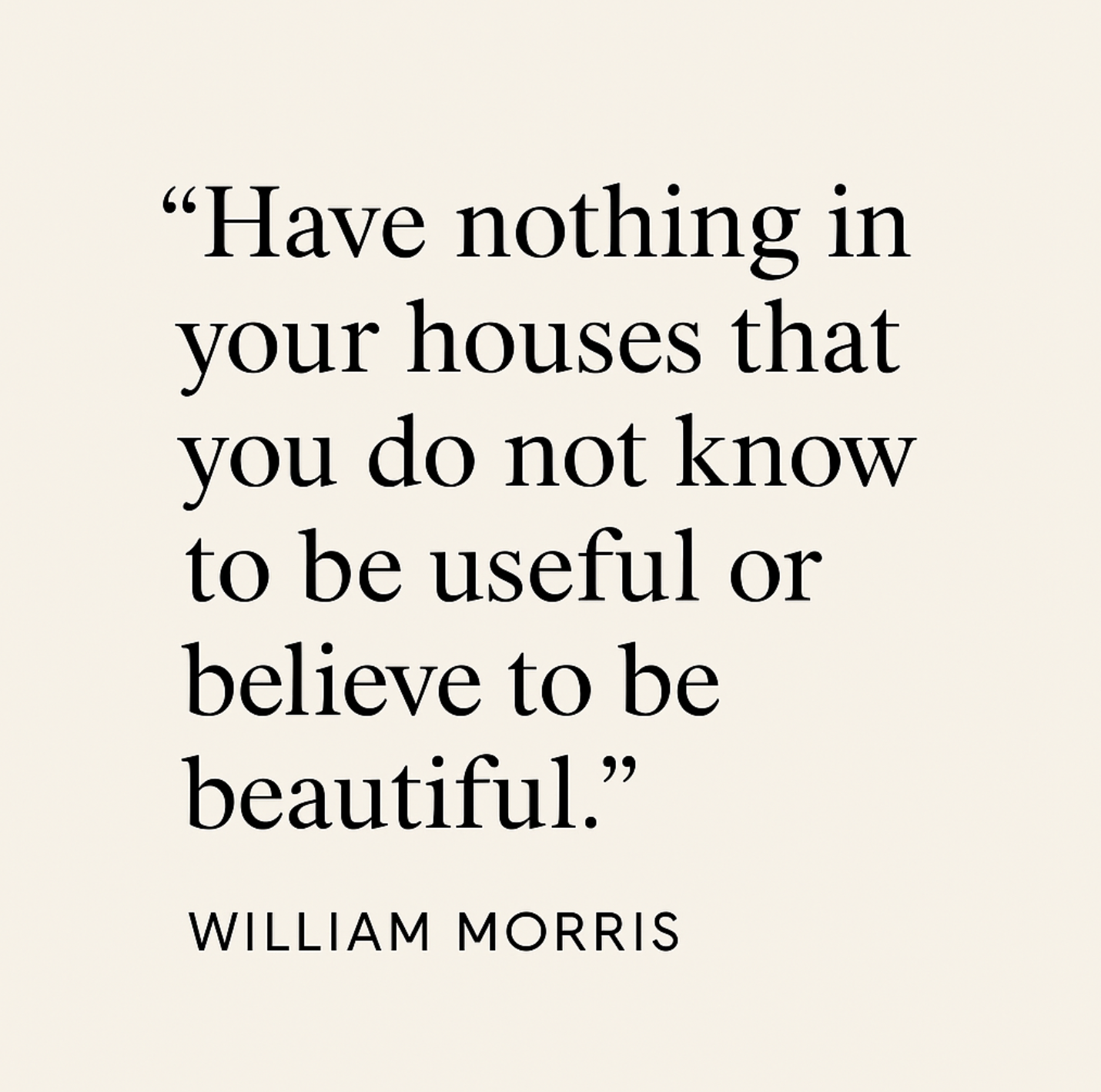
We think the stuff is what brings us joy—but it’s actually the ease of a well-managed home that creates space for joy.
The more we have, the more we have to take care of. The less we have, the easier it becomes to put things away, find what we need, and feel peaceful in our space.
One small shift I’ve made that helps tremendously: doing smaller loads of laundry or running the dishwasher more often. If you don’t love putting things away, why wait until there’s two or three days’ worth to deal with? Half a load means half the time. At the end of the week, it’s still the same amount of laundry or dishes—but the mental load is lighter and the task feels easier.
Simplifying isn’t about deprivation—it’s about freedom. You’re not giving things up; you’re giving yourself a home that’s easier to care for, easier to live in, and more reflective of who you are right now.
Thank you to SK for sharing your expertise, encouragement, and thoughts around living with less. Connect with SK on IG to follow along. If you’re ready to simplify an area of your home, our July Organizing Special is the perfect package for you. Consider what could be accomplished with 4 hours with 2 organizers in your home:
In your kitchen, we can give your pantry and cooking supplies a thorough clean out and refresh. We could remove the layer of unnecessary and underutilized gadgets and serving ware. We could assess the problem areas by bringing fresh perspective and solutions.
In your linen closet, we could create order by sorting and categorizing sheet sets and towels. We can implement smarter systems of folding and storing to maximize space and accessibility.
In your closet, we could empower you to let go of clothing and accessories that are no longer serving you. Incorporating new hangers can streamline your wardrobe and add a level of luxury to getting dressed as well as putting clothes away.
In your bathroom, we could pull all of your items out and help you take an honest inventory of what products you no longer need. We love to incorporate appropriate storage solutions to save a lot of space in small areas.